

Winery
In our production we combine traditional methods with technology
Architecture
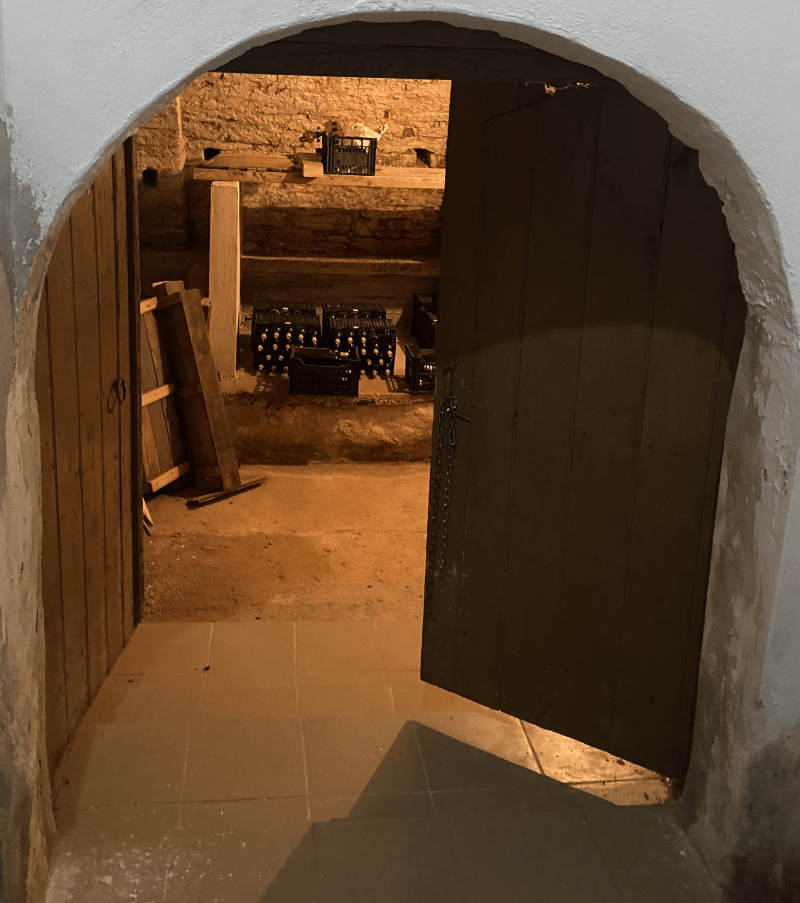
The winery is located within the city of Kozani. Over the decades, modernization and reconstruction have resulted in the creation of a multi-level building with ground floor, semi-ground floor and basement. The altitude difference between the levels allows the transport of wine without the use of machines. The main area of the winery is located on the semi-ground floor which provides a natural insulation that protects against extreme changes in temperature, which is so disliked by wine. For the unsuspecting visitor, a pleasant surprise is the existence of the stone vaulted basement, of unknown construction date, used as a cellar. The traditional basement, throughout the year, ensures quite good to ideal conditions of temperature and humidity, for the maturation, aging and storage of the wine.
Winery equipment
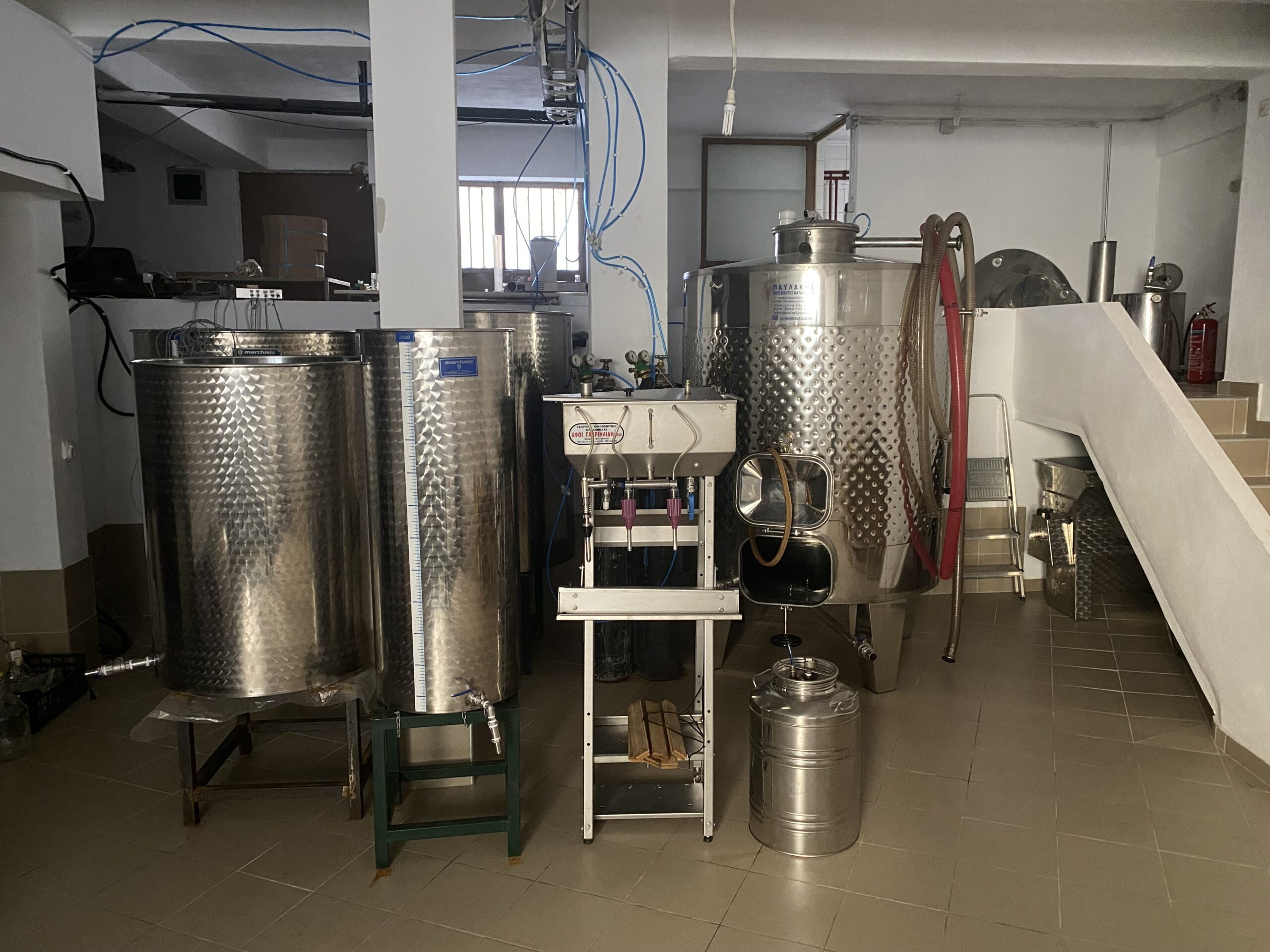
The capacity of the winery in produced wine is quite low (maximum capacity 4000-5000 bottles / year). The equipment of the winery consists of winemaking tanks of various capacities and various auxiliary equipment. The construction material of the tanks and other equipment is stainless steel. The surface of stainless steel is macroscopically smooth and allows its relatively easy and efficient cleaning. On the contrary, tanks made of materials such as concrete, used wooden barrels and jars, are characterized by increased surface roughness, resulting in the formation of outbreaks of contamination at various points on the surface. Thus vinification in such tanks, without the use of sulfites, is practically difficult as well as impossible. In selected years, we also produce aged wines. In these cases, the aging is done in new oak barrels.
Natural vinification
Grape-Harvest
After the Harvest
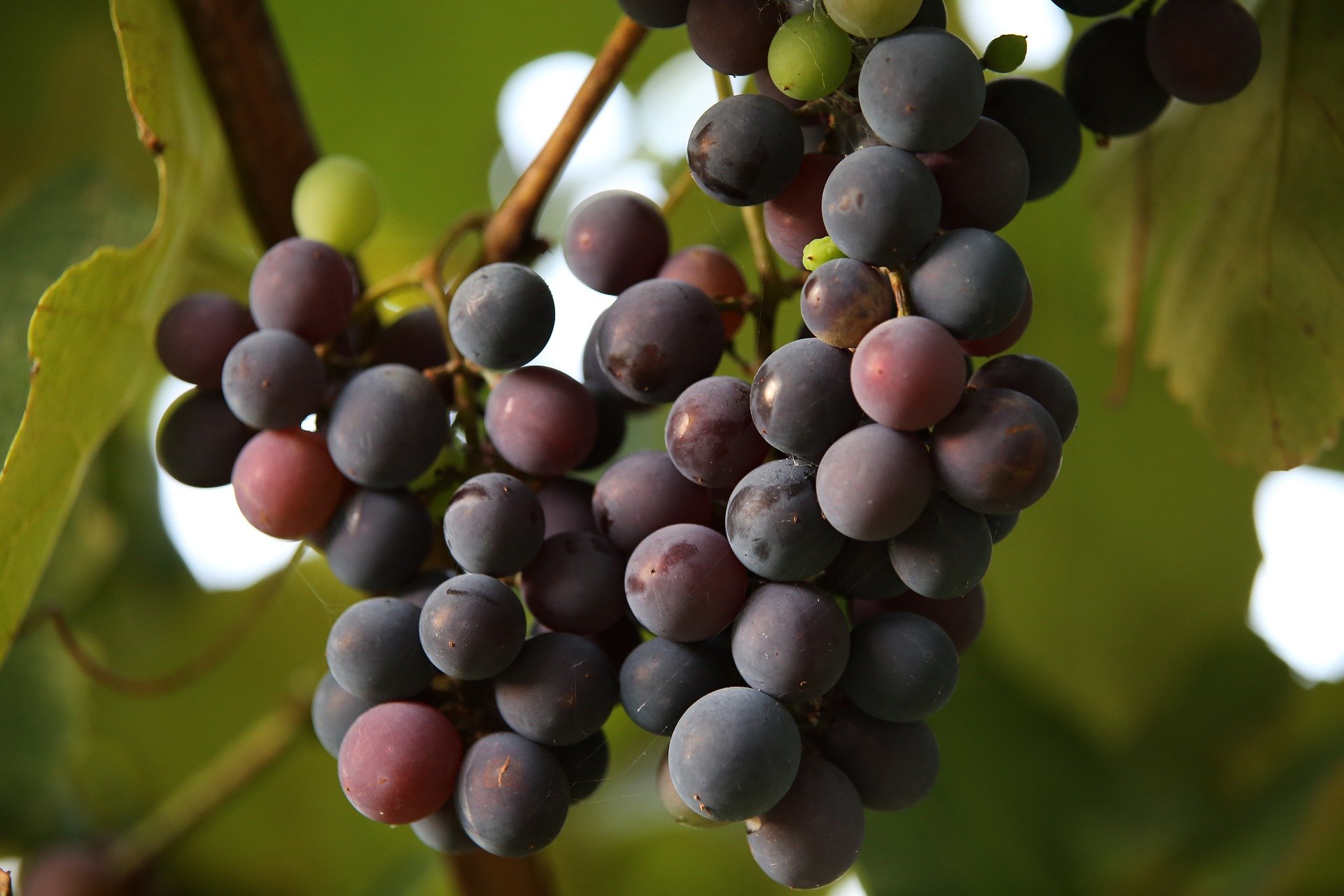
The cultivation method followed is as follows result extremely low acreage yields in grapes e.g. 300 kg / acre. For to enable the production of natural wines, a necessary condition is the use grapes of excellent condition. Thus, at During the harvest, on-site sorting is done bunches and removal of unsuitable horns, and if necessary may followed at the winery and a second sorting. In addition to the sick and rotten grapes, the which are foci of infection and creation unwanted odors, unripe ones are removed and dried grapes, which can also to give the wine unwanted aromas.
Special care is taken during cutting bunches and stacking crates to there should not be the slightest pressing of horns as well these juices can be the trigger to start fermentation by unwanted microorganisms. In some cases, besides our grapes we also used grapes from other producers.
After the Harvest
The close distance between the vineyards and the winery, allows the fast transfer of the grapes to the winery for their direct pressing. No sulfites are used at any stage of vinification. Alcoholic and malolactic fermentation is done with the wild-native yeasts and bacteria present in the grapes. Both the non-use of sulfites and the non-inoculation with yeasts and bacteria are an exceptional risk during vinification, as the development of undesirable yeasts is very likely, etc. However, with proper care, vinification can be crowned with success. Also, albumin or any other substance is not used to correct clarity, taste, color, etc.